An Gof and the Cornish Rebellion of 1497
About this story
In 1497, Michael An Gof led 15,000 Cornishmen to London, opposing a tax for a distant war. Their bravery, despite defeat, immortalized them as heroes of Cornish resistance.
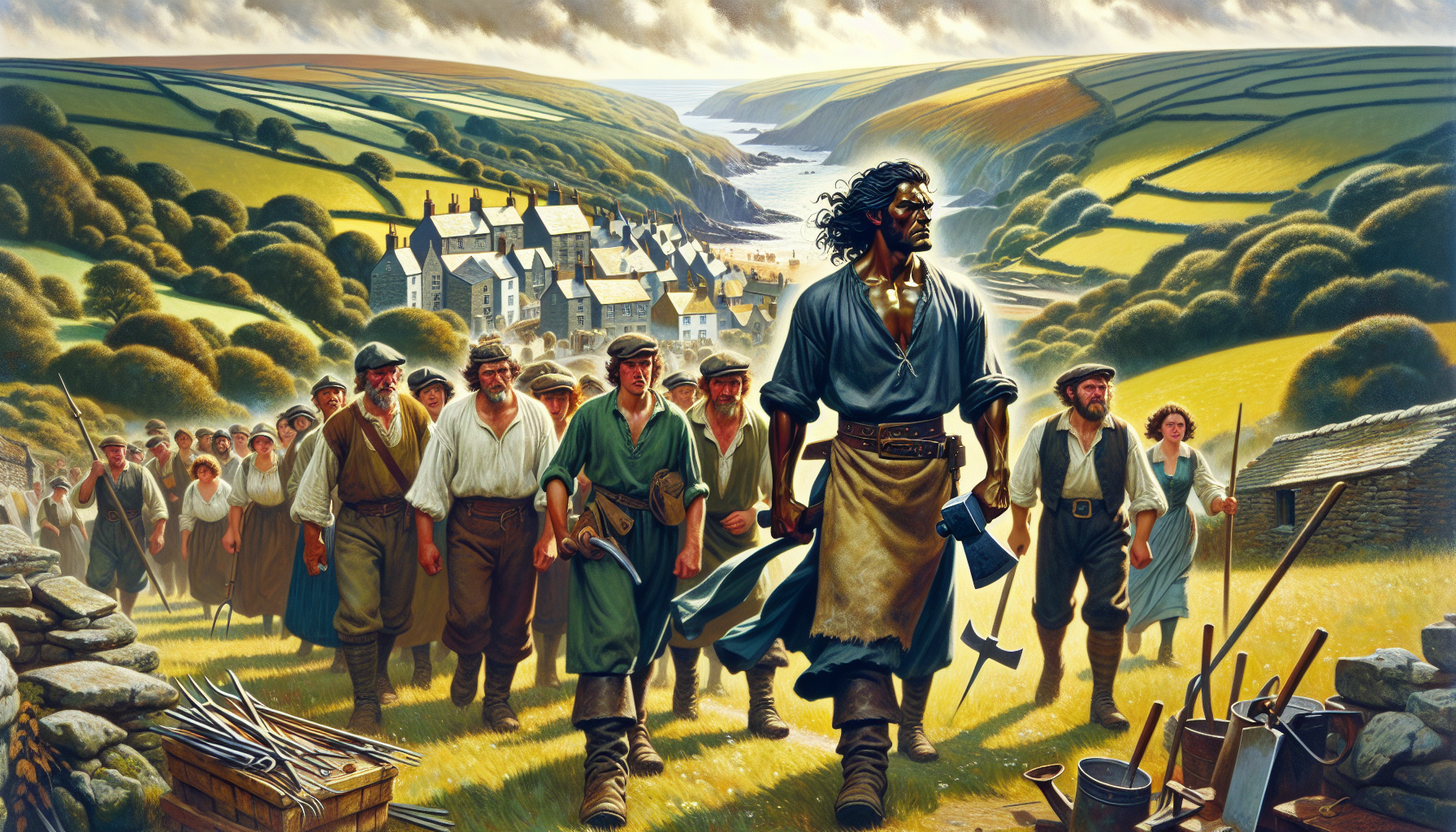
In the summer of 1497, 15,000 Cornishmen marched on London. They were led by a blacksmith from St Keverne named Michael An Gof (which means "The Smith" in Cornish) and a lawyer from Bodmin named Thomas Flamank.
Their grievance was simple: King Henry VII had imposed a tax to fund a war against Scotland — a conflict that had nothing to do with Cornwall. The Cornish refused to pay for a distant war that was not their concern.
"We will not be taxed for a war that is not our war," declared An Gof. "We are Cornish, not English, and we will march to London to tell the king so."
And march they did. From St Keverne to Bodmin, from Bodmin to Exeter, from Exeter to Wells, the Cornish army grew as it advanced. They were farmers and fishermen, tinners and blacksmiths, armed with little more than pitchforks and righteous anger.
They reached the outskirts of London and faced the king's army at Blackheath on June 17th, 1497. Outnumbered and outmatched by professional soldiers, the Cornish were defeated. An Gof and Flamank were captured and executed at Tyburn.
But before his death, Michael An Gof declared: "I shall have a name perpetual and a fame permanent and immortal." He was right. In Cornwall, An Gof is remembered as a hero who stood against tyranny. A statue of him and Flamank stands at St Keverne, and their memory is honoured every year on June 17th.
Source: Historical records of the Tudor period, Cornwall Council heritage archives, and the University of Exeter Cornish Studies collection. Public domain historical information.
Comments (0)
Sign in to join the conversation
No comments yet. Be the first to share your thoughts!
