The Wreckers: Truth Behind Cornwall's Darkest Legend
About this story
The tale of Cornish wreckers is steeped in legend, yet the truth reveals communities salvaging shipwrecks as a means of survival and hope amidst hardship.
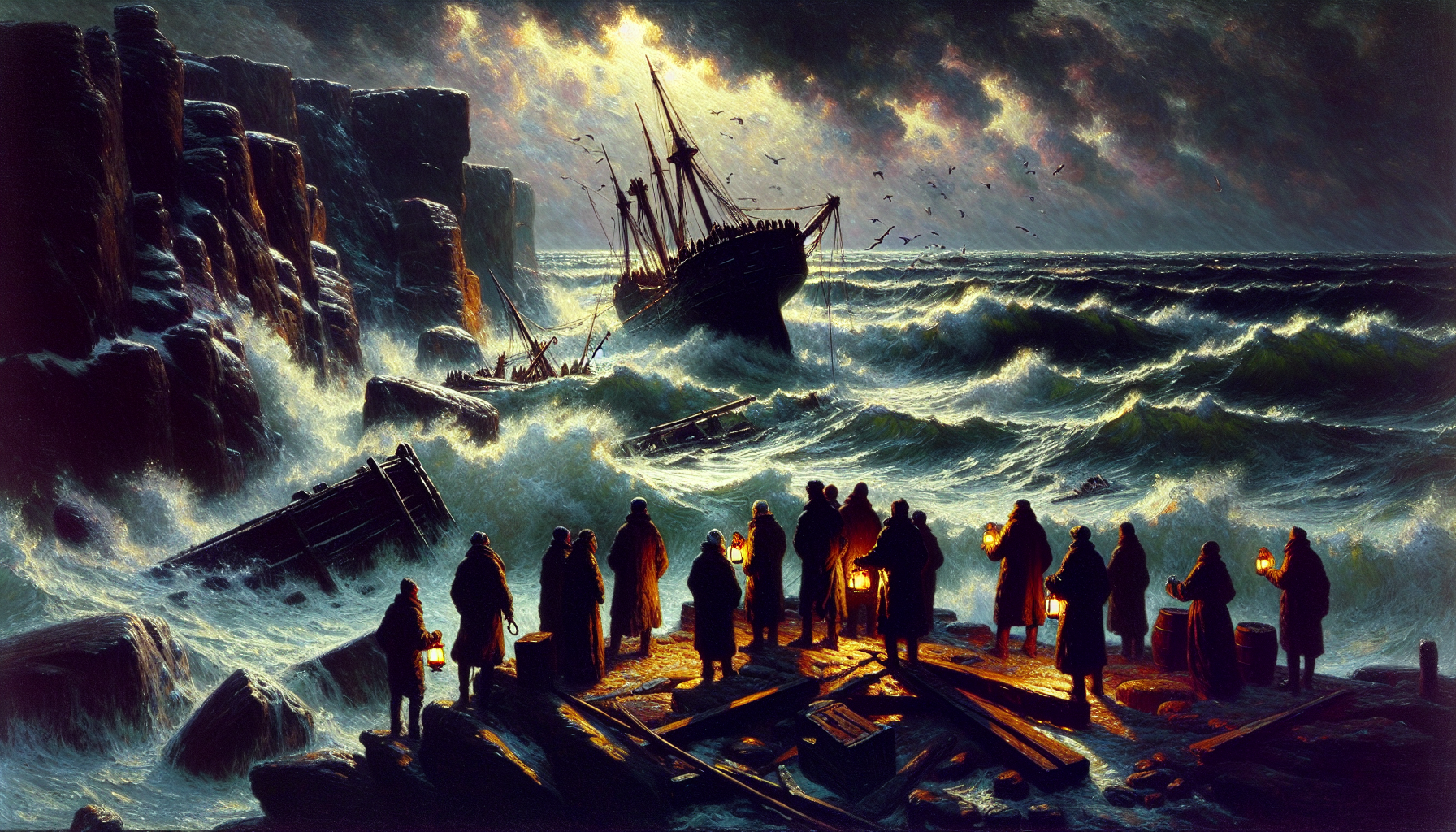
The image of Cornish villagers luring ships onto the rocks with false lights is one of the most persistent legends of the county. But how much of it is true?
The reality is more complex than the legend. While there is no proven case of Cornish people deliberately causing a shipwreck, there is abundant evidence that coastal communities enthusiastically salvaged the cargo of ships that ran aground naturally.
And run aground they did — by the hundreds. The Lizard Peninsula alone saw over 200 wrecks in the 18th century. Every winter storm brought ships onto the granite reefs that lurk just below the surface.
When a ship struck, the word spread faster than the coastguard could ride. Entire communities would descend on the beach to claim what the sea offered. Flour, wine, timber, cloth — whatever the ship carried became common property of whoever could carry it away.
The Reverend Troutbeck famously prayed: "We pray Thee, O Lord, not that wrecks should happen, but that if any wrecks should happen, Thou wilt guide them into the Scilly Isles for the benefit of the inhabitants."
The customs men fought running battles with villagers over salvage rights. At Gunwalloe in 1787, an entire cargo of Portuguese wine was spirited away by the time authorities arrived — the villagers claimed the sea had drunk it.
Wrecking was not murder; it was poverty's response to unexpected bounty. When survival meant going hungry, a wrecked ship was a gift from Providence.
Source: Cornwall Maritime Heritage archives, John Behenna's "Cornish Wrecks" (public domain), and customs house records. Historical research published in the public domain.
Comments (0)
Sign in to join the conversation
No comments yet. Be the first to share your thoughts!
More stories you might enjoy
The Hurling of St Columb: The Wildest Game in Britain
Every Shrove Tuesday and the following Saturday, the town of St Columb Major transforms into a battleground for one of the oldest and most violent sports in Bri...
Dolcoath Mine: The Queen of Cornish Mines
For over 400 years, Dolcoath Mine near Camborne was the deepest, richest, and most famous tin and copper mine in Cornwall — and arguably the world. The Cornish ...
Tom Bawcock's Eve: The Fisherman Who Saved a Village
Every December 23rd, the village of Mousehole celebrates Tom Bawcock's Eve with a peculiar dish called Stargazy Pie — a fish pie with whole pilchards poking the...