The Great Blizzard of 1891
About this story
The Great Blizzard of 1891 paralyzed Cornwall, claiming lives, livestock, and livelihoods, leaving a lasting impact on the community.
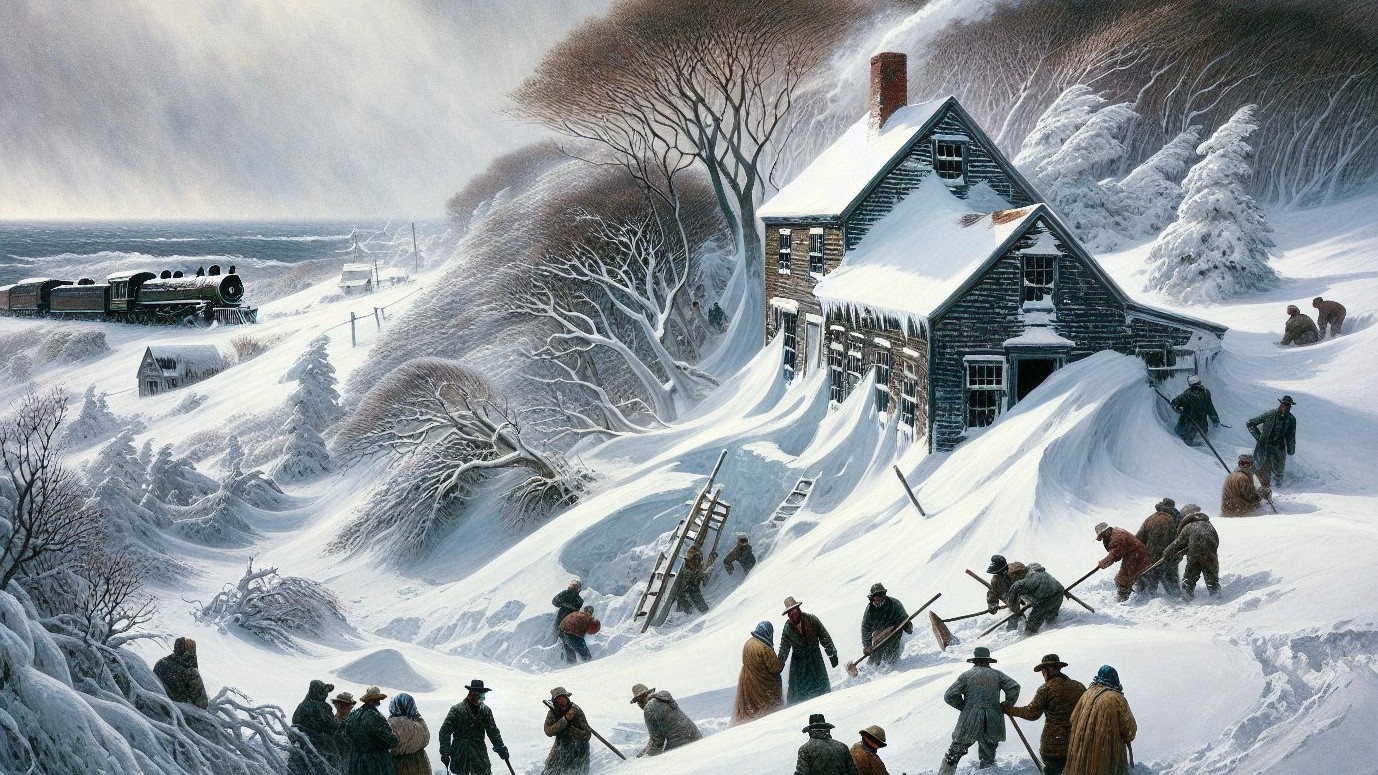
In March 1891, Cornwall experienced one of the most devastating blizzards in its recorded history. For four days, from the 9th to the 13th of March, snow fell relentlessly across the county, driven by fierce easterly winds that created drifts up to 15 feet deep.
The railways were brought to a complete standstill. Near Truro, a train became buried so deeply in snow that passengers had to be rescued by local farmers who dug through the drifts with shovels. Many spent days trapped in isolated farmhouses and cottages.
At least 220 people died across the West Country, with many found frozen in the fields where they had tried to tend their livestock. The fishing fleet at Newlyn lost several boats, and the harbours at Mousehole and Porthleven were blocked with ice and snow for days.
What made this storm so deadly was its timing — it struck during lambing season, and thousands of sheep and their newborn lambs perished. Some farmers lost their entire flocks. The economic impact on Cornwall's agricultural communities took years to recover from.
Old-timers spoke of this blizzard for generations afterward, marking time as "before the great snow" and "after the great snow." It remained the benchmark against which all subsequent Cornish winters were measured.
Source: Historical weather records, Meteorological Office archives, and contemporary newspaper reports from the West Briton and Cornish Guardian. Public domain historical information.
Comments (0)
Sign in to join the conversation
No comments yet. Be the first to share your thoughts!
More stories you might enjoy
The Hurling of St Columb: The Wildest Game in Britain
Every Shrove Tuesday and the following Saturday, the town of St Columb Major transforms into a battleground for one of the oldest and most violent sports in Bri...
The Wreckers: Truth Behind Cornwall's Darkest Legend
The image of Cornish villagers luring ships onto the rocks with false lights is one of the most persistent legends of the county. But how much of it is true? ...
Dolcoath Mine: The Queen of Cornish Mines
For over 400 years, Dolcoath Mine near Camborne was the deepest, richest, and most famous tin and copper mine in Cornwall — and arguably the world. The Cornish ...