The Cornish Pasty: A Miner's Portable Feast
About this story
The Cornish pasty, crafted for miners, served as a practical meal and a symbol of safety in the perilous tin mines, blending tradition, ingenuity, and local heritage.
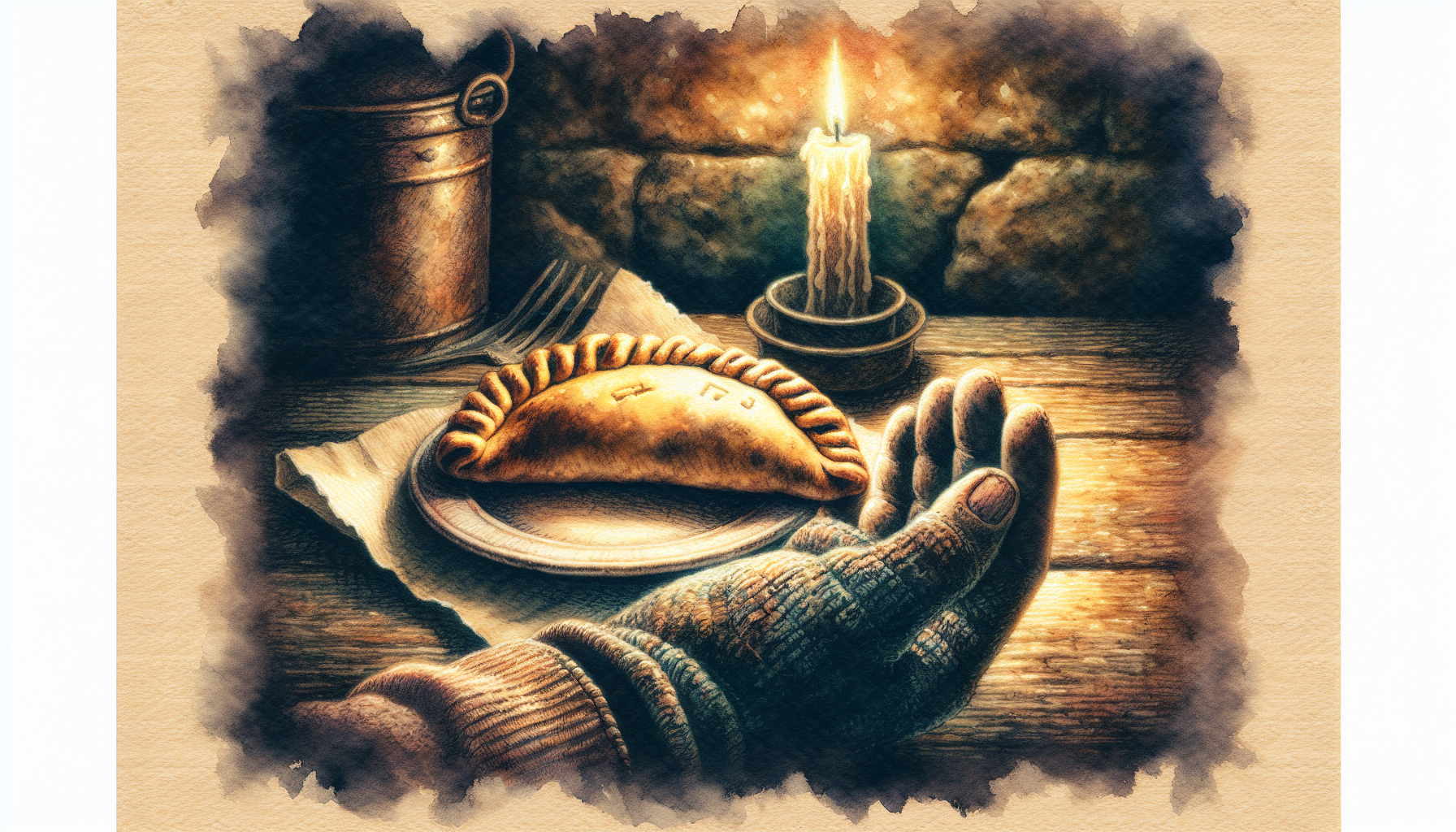
The Cornish pasty is more than food — it's a piece of engineering designed for the most dangerous workplace in the world: the tin mine.
The crimped crust that runs along one side of a traditional pasty isn't just decorative. It was a handle. Miners' hands were covered in arsenic — a deadly byproduct of tin extraction. By holding the pasty by its thick crust and discarding it after eating, they could enjoy their meal without poisoning themselves.
Some miners claimed the discarded crusts were left for the knockers — the spirits that lived in the mines and warned of impending cave-ins with their tapping sounds. Keep the knockers happy, and they'd keep you safe.
The traditional filling — beef, potato, swede (called "turnip" in Cornwall), and onion — was chosen for practicality. It could be cooked the night before and reheated by placing it on a shovel over a candle flame deep underground. The dense filling held heat for hours.
Miners' wives would mark their husband's initials in the pastry so each man got his own. Some pasties were half savoury, half sweet — dinner and dessert in one package, with a pastry divide in the middle.
In 2011, the Cornish pasty was awarded Protected Geographical Indication status by the European Commission. To be called a genuine Cornish pasty, it must be made in Cornwall, crimped on the side, and shaped as a "D."
The pasty that kept miners alive for centuries is now Cornwall's most famous export — over 120 million are eaten every year.
Source: Cornish Pasty Association, EU Protected Food Names register, and Cornish mining heritage archives. Historical and cultural information in the public domain.
Comments (0)
Sign in to join the conversation
No comments yet. Be the first to share your thoughts!
More stories you might enjoy
The Hurling of St Columb: The Wildest Game in Britain
Every Shrove Tuesday and the following Saturday, the town of St Columb Major transforms into a battleground for one of the oldest and most violent sports in Bri...

The Death and Resurrection of the Cornish Language
In 1777, Dolly Pentreath of Mousehole died. She is traditionally remembered as the last native speaker of Cornish — the ancient Celtic language that had been sp...
The Lost Gardens of Heligan: Sleeping Beauty Awakened
In 1990, Tim Smit was exploring the overgrown grounds of a derelict Cornish estate when he found something extraordinary: a door hidden beneath brambles, and be...